Introduction
The dream of moving to Spain is a powerful one, built on visions of sunshine, beautiful cities, and a slower, more enjoyable pace of life. For many people in the US, UK, and around the world, it represents a chance to reset, redesign their lifestyle, and plug into Europe.
But behind that dream sits a bureaucracy that is constantly changing. What used to “work” for getting legal in Spain even a year or two ago can now be completely outdated. Relying on old advice, old blog posts, or Facebook group hearsay is one of the fastest ways to derail your move.
One of the most misunderstood pieces in this puzzle is the NIE: that strange-looking foreigner identification number that appears everywhere in Spanish life.
This article breaks down five of the most surprising, counter-intuitive, and strategically important truths about the NIE system in 2026 that you need to understand before you make your move.
The “Forever” Number: Your NIE Never Dies
Many people believe their NIE “expires” when their residency card expires. It feels logical: card gone, number gone. But that is not how the Spanish system works.
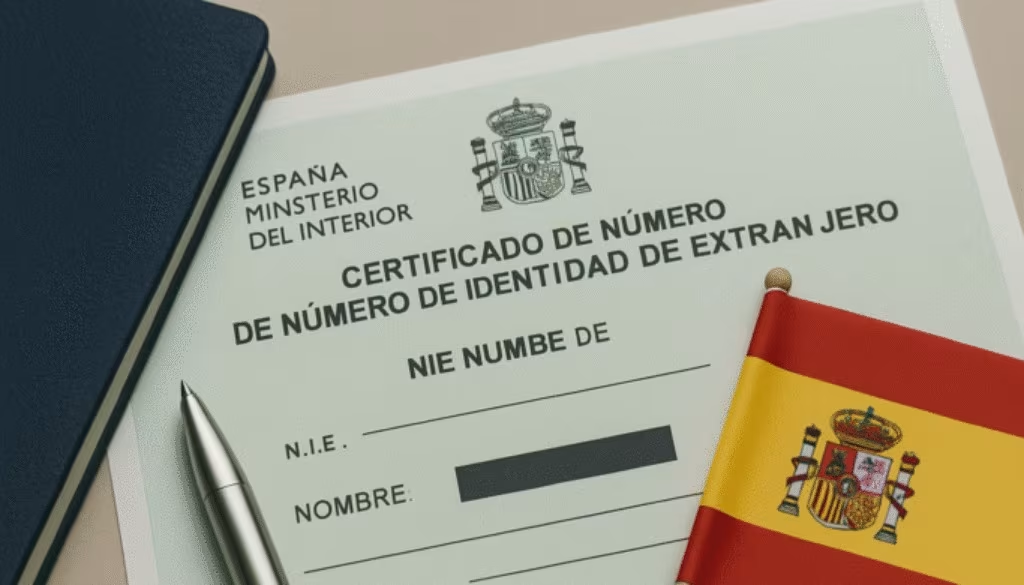
The NIE (Número de Identidad de Extranjero) is not a card and not a visa. It is a permanent identification number assigned to you as a foreigner in Spain. While your physical residency card (TIE) or certificates can and do expire, the NIE number itself is designed to follow you for life.
Once you have been assigned an NIE, it will normally stay with you permanently, unless it is revoked in extreme situations such as proven fraud.
Why this matters:
– If you lived in Spain years ago as a student and are now returning as a remote worker, you will still be linked to the same NIE.
– If you bought a Spanish property in the past and are now applying for residency, that same number will still sit behind your property records and tax profile.
– Your fiscal history, social security contributions, and many other records are all tied to that single identifier over time.
The practical implication: do not expect to be “given a new NIE” each time you change status. Understanding that it is permanent helps you plan your long-term relationship with Spain more strategically.
The 2026 Fraud-Proof Revolution: The End of the Appointment Black Market
For years, one of the biggest pain points for anyone dealing with Spanish immigration was a simple phrase: “No appointments available.”
In major cities, appointments for NIE and residency became so scarce that a black market emerged. Bots would grab appointments the second they opened and resell them for hundreds of euros to desperate applicants. People planning life-changing moves were blocked not by law, but by an appointment calendar.
The 2026 reforms are designed to end that era. Spain has begun rolling out a more centralized, digitized system that makes this kind of abuse much harder. Two core changes matter for you:
– Centralized digital hub: Instead of fragmented regional systems, appointments and filings are increasingly handled through a unified online platform, reducing local bottlenecks and inconsistencies.
– Personalized verification codes: To stop bots and resellers, the system issues unique verification keys tied to a specific applicant. These codes are designed so that only the real person can book and use the appointment.
What this means for you:
– Less “who you know” and more transparent, rules-based access.
– Less risk of needing to pay a stranger online just to get a slot.
– More emphasis on doing things correctly and on time inside the official system.
The black market is being squeezed out. But this also means you need to respect the new technical steps and verification processes. Those who adapt smoothly will move faster than those who still expect the “old way” to work.

The Golden Rule of the Digital Certificate: One Computer, One Browser, No Mistakes
In the modern system, the digital certificate (Certificado Digital) is the closest thing to a “cheat code” for Spanish bureaucracy. With it, you can:
– File forms and pay fees without going in person.
– Sign documents electronically.
– Access a range of government portals from your laptop.
For NIE-related processes, taxes such as Form 790 (Code 012), and residency renewals, the digital certificate can save weeks of waiting and multiple in-person trips.
But there is one strict rule that catches out thousands of applicants every year:
The entire process to obtain your digital certificate must be done on the same device, with the same browser, under the same user profile, from start to finish.
If you:
– Switch from one computer to another.
– Change user accounts.
– Reinstall or heavily update your browser.
– Clear certain cryptographic elements from your system.
you risk breaking the link between the private keys generated on your machine and the certificate issued later. The result: the installation fails, and you need to start again.
For anyone planning a move to Spain, the smart play is to:
– Choose one stable computer (PC or Mac) for the whole process.
– Avoid unnecessary updates, resets, or cleanups until the certificate is fully installed.
– Follow the official instructions closely, step by step.
The digital certificate is worth the effort. Get it right the first time, and a huge part of Spain’s bureaucracy moves from queues and offices to your screen.
NIE vs TIE: Solving the Identity Confusion
One of the most common points of confusion is the difference between NIE and TIE. Many people use the terms almost interchangeably, which leads to serious misunderstandings.
Here is the clean distinction:
– NIE: A number. It is your foreigner identification number in Spain. It is not, by itself, proof of residency.
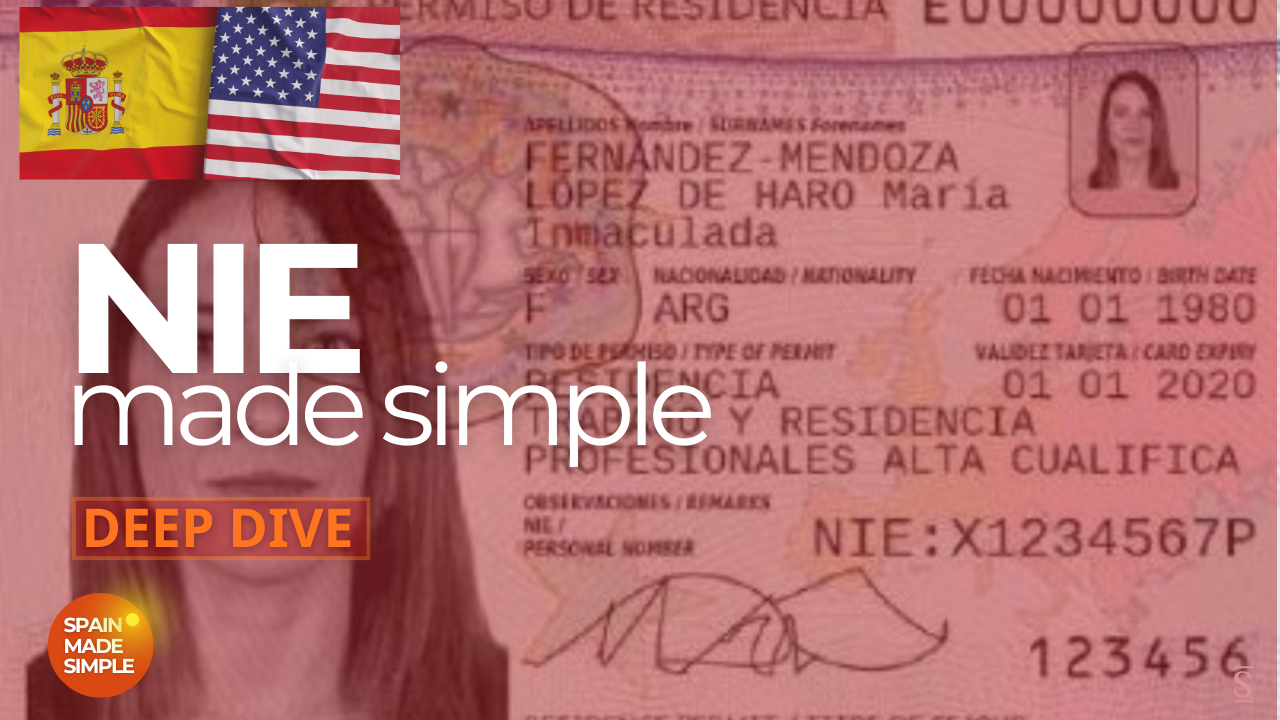
– TIE: A physical card. It is your Tarjeta de Identidad de Extranjero, a biometric plastic card that proves your legal residence as a non-EU citizen.
A useful way to think about it:
The NIE is like the underlying ID number. The TIE is like the plastic card that shows your face and that number together, proving your right to be in the country.
For EU/EEA/Swiss citizens, the “green certificate” or paper-format documentation carries the NIE and serves as proof of their registration as residents. For non-EU citizens, the TIE is the key document that proves legal stay and must be renewed according to the conditions of the visa or permit.
The critical truth:
Having an NIE does not automatically mean you are a resident or that you have the legal right to live and work in Spain. You can have an NIE for one narrow purpose (for example, to buy a property) and still not hold legal residency status.
Understanding this difference is essential for planning:
– When you are applying for a visa or residency, what you are really pursuing is the right to a TIE (or equivalent EU registration for EU citizens).
– The NIE will be part of the process, but it is not the end goal by itself.
Regional Exceptions: The Bailén and Torrevieja Traps
Even as Spain moves towards a more centralized system, regional quirks and exceptions still exist. These can quietly sabotage an otherwise solid application if you are not prepared.
A key area where this comes up is in the payment of government fees via Form 790. In most of Spain, you will use your NIE when paying these taxes at a bank. However, some specific offices have their own strict rules.
Two well-known examples:
– Bailén (Valencia region): This office may require you to pay your Form 790 using your passport number, even if you already have an NIE. If you use your NIE instead of your passport, the application can be rejected.
– Torrevieja: Similar local practice; the office often expects the passport number on the payment rather than the NIE in certain procedures.
These details sound minor, but the consequences are not. A single incorrect number on the wrong form can mean:
– Your application is not accepted at the window.
– You lose your appointment slot.
– You face a new wait of weeks or months to be seen again.
The lesson is simple: national rules set the framework, but local interpretations still matter. Having someone on your side who understands these nuances can save you time, money, and a lot of stress.