Introduction
The dream of Spain is intoxicating. You’ve seen the Instagram Reels of cobblestone streets in Seville, watched countless YouTube videos of Barcelona’s Gothic Quarter, and maybe even fantasized about waking up to the sound of waves crashing on the Costa del Sol.
But here’s the truth that most “move to Spain” content won’t tell you: choosing the wrong region can derail your entire relocation dream before it even begins. The Barcelona that works for a 28-year-old digital nomad is entirely different from the Andalusian village that’s perfect for a retiree seeking peace. And the Costa Brava hideaway that sounds idyllic in travel blogs might leave you isolated and struggling to build community.
As we navigate 2026, Spain firmly holds its position in the top five globally for Quality of Life, a ranking driven by world-class healthcare, celebrated safety, and a “trust culture” that is increasingly rare in the modern West. Beyond the attractive cost savings, still 30% to 40% lower than major U.S. hubs like New York or San Francisco—Spain offers something far more valuable: a different relationship with time, culture, and community.
This guide reveals the strategic truth about Spain’s best regions for American expats—not the romanticized version, but the real-world analysis you need to make an informed decision.
The Metropolitan Showdown: Madrid vs. Barcelona
Let’s address the elephant in the room. Every American moving to Spain wrestles with this question: Madrid or Barcelona?
The answer isn’t what most people think.
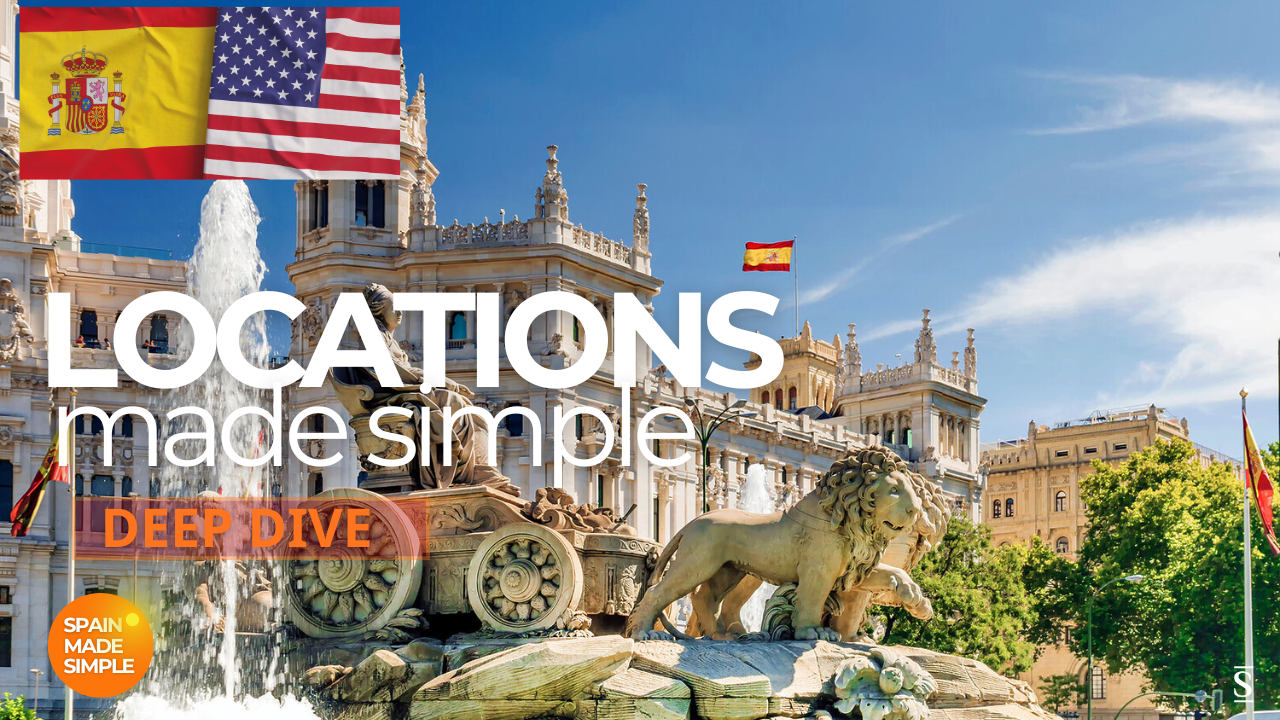
Madrid is the imperial capital with logistical precision. It’s the centralized rail hub of the entire peninsula; if you need to travel for business or explore Spain extensively, Madrid’s position is unmatched. The energy is high, the nightlife is legendary, and the food scene rivals any European capital. This is a city that pulses with creative energy, where museums stay open until midnight and neighborhoods like Malasaña and Chueca offer a cosmopolitan edge that feels distinctly European yet accessible to Americans.
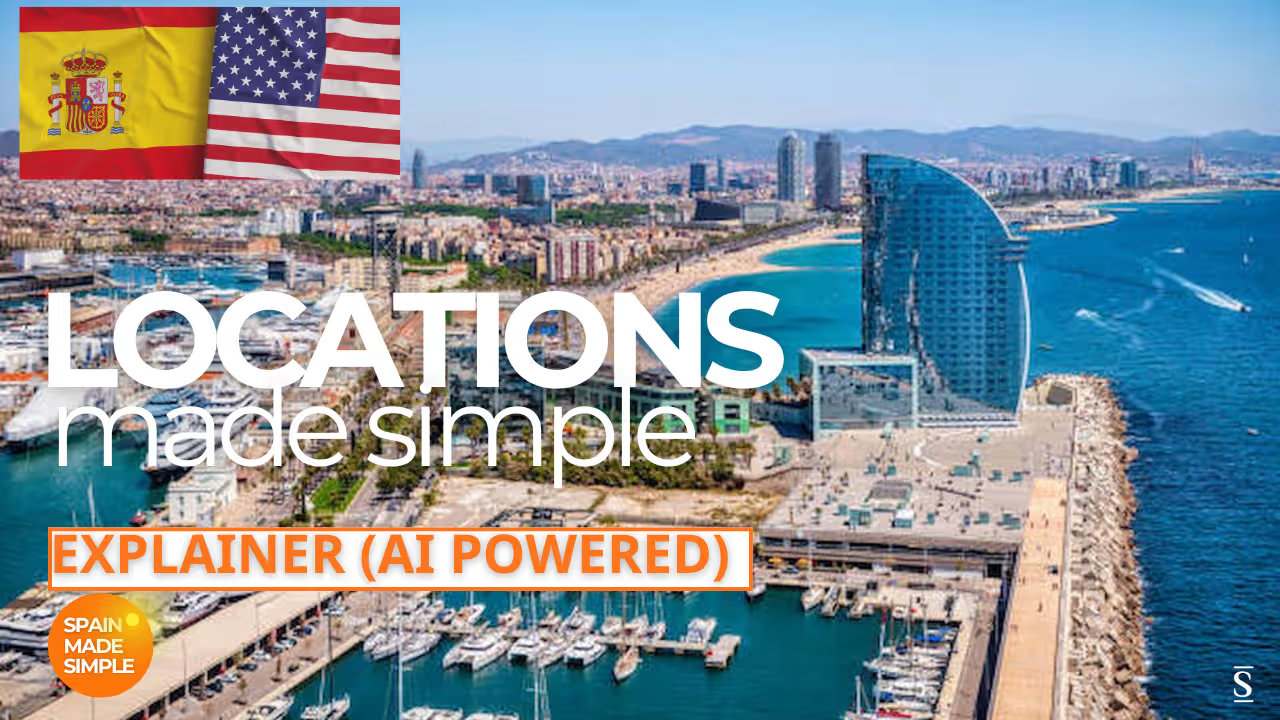
Barcelona, by contrast, is where Gothic shadows and Gaudí’s whimsy meet the Mediterranean. It’s the city for those who refuse to compromise on coastal living but still demand international infrastructure. Morning beach runs before work meetings. Weekend escapes to Costa Brava coves. The Catalan identity that permeates every corner, from language to cuisine to civic pride. This is a city that looks outward to the sea and has built an identity around creative innovation and Mediterranean beauty.
Here’s the insider truth: Madrid has higher English proficiency than Barcelona, which shocks most people who assume the opposite. For American expats in Barcelona, the American Society of Barcelona becomes an essential lifeline—it’s approximately half American and half European, creating a natural networking hub for newcomers.
The bottom line? Choose Madrid if you value central access, high urban energy, and a more traditionally Spanish cultural experience. Choose Barcelona if the Mediterranean lifestyle, architectural beauty, and coastal proximity are non-negotiable.
The Mediterranean Sweet Spot: Valencia, Alicante, and Murcia
If you’re seeking sun-drenched coastal living without Barcelona’s intensity, the central Mediterranean arc offers a sophisticated alternative that most Americans overlook.
Valencia is the hidden gem that locals have been trying to keep secret. Frequently ranked for its exceptional quality of life, Valencia offers a seamless blend of historic urban culture and the lush, five-mile Turia Gardens, a former riverbed transformed into Europe’s largest urban park. This is where families find balance: beaches within fifteen minutes, a vibrant food scene anchored by the birthplace of paella, and a growing international community that hasn’t yet tipped into tourist saturation.
Valencia represents something increasingly rare: a genuinely liveable European city that hasn’t sacrificed its character to tourism. The architecture ranges from medieval towers to Santiago Calatrava’s futuristic City of Arts and Sciences. The neighborhoods maintain their distinct identities. And the pace of life allows for both professional ambition and the legendary Spanish work-life balance.
But here’s where it gets interesting.
Alicante and Murcia are the peninsula’s premier value picks for those willing to embrace a more authentically Spanish lifestyle. These cities deliver Mediterranean beauty, modern infrastructure, and genuine community, without the expat density that can create cultural bubbles. This is where your presence as an American will be more novel, where learning Spanish becomes essential rather than optional, and where integration into local life happens organically.
The catch? These cities have smaller expat communities, which means you’ll need to be more intentional about building your social network. But for those willing to lean into the adventure, the reward is a richer, more immersive Spanish experience.

The Soul of the South: Seville, Granada, and the Costa del Sol
Andalusia is where the romantic vision of Spain becomes a daily reality. This is the Spain of flamenco echoing through ancient courtyards, jasmine-scented streets at dusk, and a relationship with history that feels alive rather than preserved in museums.
The Historic Inland: Granada and Seville
These cities offer deep cultural immersion in settings that have shaped Spain’s identity for centuries. Granada sits in the shadow of the Sierra Nevada, where the Alhambra stands as one of Europe’s most breathtaking architectural achievements. The Arab influence is no historical footnote but living culture, visible in the tilework, audible in the music, and tastable in the tea houses of the Albaicín.
Seville is pure Andalusian energy: the intensity of Semana Santa processions, the joy of the Feria de Abril, and neighborhoods like Triana where local pride runs deep. This is a city that teaches you what it means to live publicly, where evenings unfold in plazas, where strangers become friends over tapas, and where the summer heat forces a slower, more intentional rhythm.
The reality check? Summer temperatures regularly soar above 40°C (104°F). If you’re coming from the Northeast United States, the heat will be a genuine adjustment. But for those who thrive in warm climates, Andalusia offers unmatched cultural richness paired with a cost of living that makes luxury accessible on a middle-class income.
The Crown Jewel: Costa del Sol
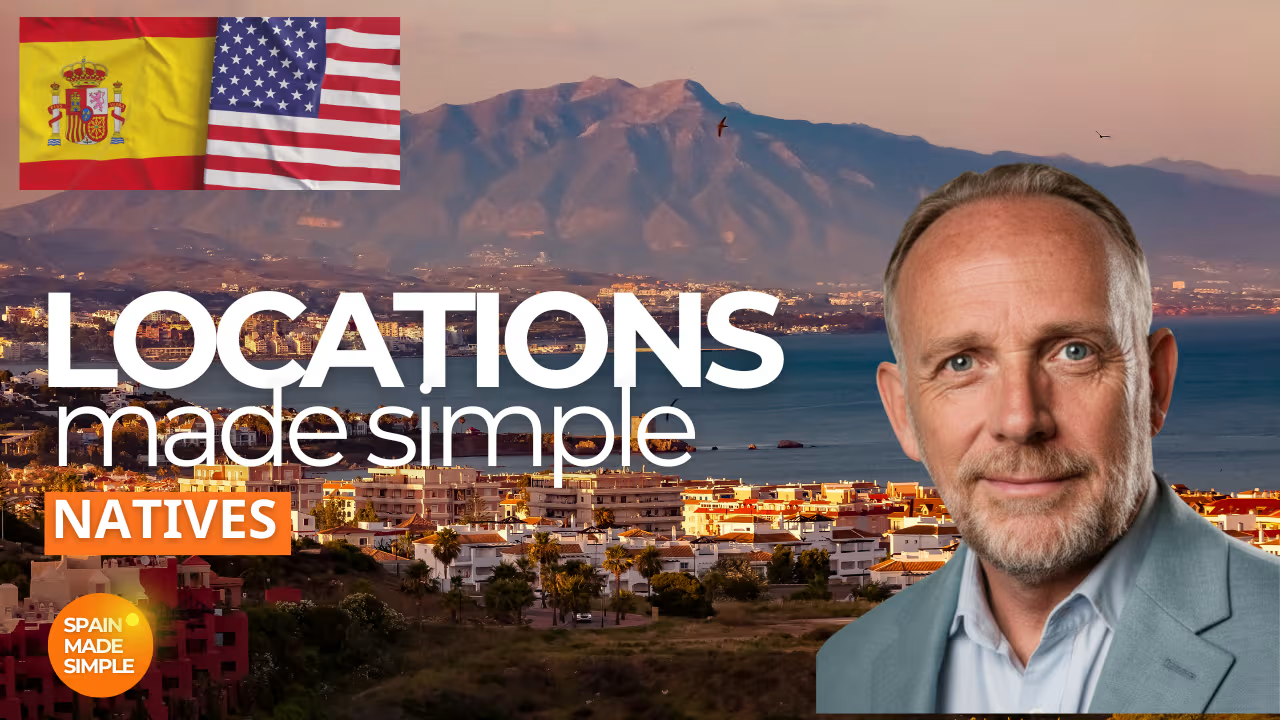
If there’s one region that has become synonymous with the expat dream in Spain, it’s the Costa del Sol. Stretching along Andalusia’s southern coast from Málaga to Estepona, this 150-kilometer coastline represents the gold standard for international living in Spain, and for good reason.
The Costa del Sol isn’t just a beach destination. It’s a fully realized ecosystem for expat life that has been refined over decades. Where other regions require you to adapt to Spanish systems and limited English infrastructure, the Costa del Sol has built its identity around serving an international population without sacrificing authentic Spanish character.
Málaga: The Cultural Capital
Málaga has undergone one of Europe’s most impressive urban transformations. Once overlooked as merely a gateway to coastal resorts, it has evolved into a sophisticated cultural destination that rivals Barcelona and Madrid for museums, dining, and year-round urban energy.
The Picasso Museum, the Centre Pompidou outpost, the Thyssen Museum, and the stunning Alcazaba fortress create a cultural landscape that gives residents genuine intellectual stimulation beyond beach life. The revitalized port area, Muelle Uno, offers waterfront dining and shopping that feels Miami-meets-Mediterranean. And the historic center, a maze of pedestrian streets, tapas bars, and centuries-old churches—remains authentically Spanish despite the international influx.
What sets Málaga apart is accessibility. The international airport connects directly to over 140 destinations, making it easier to maintain ties to the United States than almost anywhere else in Spain. Direct flights to New York, seasonal routes to major U.S. hubs, and constant connections throughout Europe mean you’re never isolated.
For Americans seeking urban sophistication with beach proximity, Málaga represents the rare combination of cultural depth, international infrastructure, and Mediterranean beauty, all at a cost of living that remains significantly below comparable coastal cities in California or Florida.
Marbella and Puerto Banús: The Luxury Standard
Marbella is where the global elite have chosen to settle. This isn’t an accident or marketing hype; it’s the result of decades of infrastructure investment, security, and services tailored specifically to high-net-worth individuals who refuse to compromise on quality of life.
The Golden Mile, stretching from Marbella to Puerto Banús, hosts some of Europe’s most exclusive residential communities. Gated villas with private beach access, Michelin-starred restaurants, designer shopping that rivals Rodeo Drive, and a concentration of luxury services—from private healthcare clinics to international schools to concierge medicine—create an environment where affluent retirees and global professionals can maintain the lifestyle they’re accustomed to.
Puerto Banús remains the beating heart of Costa del Sol luxury. The marina, filled with superyachts, is surrounded by high-end retail, premium dining, and a nightlife scene that attracts European royalty and international celebrities. This is aspirational living made accessible, not for everyone, but for those who have worked their entire careers to afford a retirement or remote work lifestyle that prioritizes quality and convenience.
What’s often missed in the luxury narrative is the substance beneath the surface. Marbella’s Old Town retains its cultural depth, whitewashed buildings, orange trees lining cobblestone streets, and family-run restaurants where locals still gather. The balance between international glamour and Spanish authenticity is what makes Marbella more than just another wealthy enclave.
Estepona and Beyond: The Emerging Alternative
For those who want Costa del Sol infrastructure without Marbella’s premium pricing, Estepona has emerged as the region’s best-kept secret. This picturesque town offers the same year-round sunshine, beach access, and international services but with a more relaxed pace and significantly lower real estate costs.
Estepona has invested heavily in becoming the “Garden of the Costa del Sol,” with manicured beaches, a revitalized old town filled with flower-covered balconies, and a growing expat community that skews toward families and active retirees rather than the jet-set crowd.
The strategic advantage? You’re still within 30 minutes of Marbella’s services and Málaga’s airport, but your monthly expenses—from rent to dining to entertainment—can be 30% to 40% lower. For Americans seeking the Costa del Sol lifestyle without stretching their retirement savings, Estepona represents exceptional value.
What’s often missed in the luxury narrative is the substance beneath the surface. Marbella’s Old Town retains its cultural depth, whitewashed buildings, orange trees lining cobblestone streets, and family-run restaurants where locals still gather. The balance between international glamour and Spanish authenticity is what makes Marbella more than just another wealthy enclave.
Why the Costa del Sol Dominates for American Expats
The Costa del Sol has become the default choice for American expats for reasons that go beyond sunshine and beaches:
Year-Round Climate: While inland cities swelter in summer and require heating in winter, the Costa del Sol maintains moderate temperatures year-round. This isn’t just comfort; it’s a health and lifestyle factor that reduces seasonal depression, keeps you active outdoors, and eliminates the need to “escape” during extreme weather.
The trade-off? The Costa del Sol is more expensive than inland Andalusia or secondary coastal cities. But for many Americans, the premium is justified by the reduced friction of daily life and the quality of services that meet North American expectations.
Island Luxury: Mallorca and Ibiza
The Balearic Islands represent the pinnacle of Mediterranean living—where crystalline waters, dramatic landscapes, and centuries-old villages create an island identity distinct from mainland Spain.
Mallorca is currently experiencing a renaissance in luxury living that goes beyond beachfront villas. There’s a “Modern Vision of Luxury Living” taking shape—a design trend that integrates contemporary, high-spec interiors with traditional Mallorquin stone aesthetics, creating homes that honor the island’s architectural heritage while meeting the expectations of international buyers.
Key areas for those seeking the Mallorcan dream include:
The insider truth? Mallorca is no longer the “affordable island escape” it once was. The expat community is now heavily weighted toward high-net-worth individuals. If you’re considering island life, you’ll need to come prepared for premium pricing but rewarded with an unmatched quality of life that balances natural beauty, cultural richness, and international community.
The Safety Factor: Why Spain’s “Trust Culture” Matters
Here’s something that doesn’t show up in cost-of-living calculators but matters enormously in daily life: safety.
Spain is exceptionally safe for solo female travelers, families, and retirees. The cities are designed for pedestrian life and remain brightly lit and active long after midnight. This isn’t just about low crime statistics—it’s about the lived experience of security that permeates daily life.
This is Spain’s “trust culture” in action. It’s the feeling of leaving a bag briefly at a café table without fearing theft. It’s the ability to walk home at midnight through well-lit streets filled with families and couples enjoying the evening. It’s the knowledge that your children can take public transportation independently without the anxiety that grips American parents.
Whether it’s the walkable precision of Munich or the 24-hour vibrancy of Seoul, Spanish cities provide that same peace of mind. While cities like Chiang Mai or Abu Dhabi top global safety charts numerically, Spain offers something equally valuable: a cultural framework where public space belongs to everyone, where community watchfulness happens organically, and where solo female travelers report feeling safer than in most Western capitals.
The insider truth? Mallorca is no longer the “affordable island escape” it once was. The expat community is now heavily weighted toward high-net-worth individuals. If you’re considering island life, you’ll need to come prepared for premium pricing but rewarded with an unmatched quality of life that balances natural beauty, cultural richness, and international community.
The Practical Reality: What You Need to Know Before You Choose
Choosing your region is step one. Making the move legally and efficiently is step two. Here’s the current reality in 2026 across the key pillars that determine relocation success: